Date time post
The Truth About Hormone Replacement Therapy: Harvard Doctor Explains Benefits, Risks, and the Mistake of the 2002 Study
Hormone Replacement Therapy (HRT) and menopause remain two of the most misunderstood subjects in women’s health.
Is estrogen really safe? When should hormone replacement therapy be started? Does a woman’s age truly matter? What is the real impact of hormones on heart health, bones, brain function, and overall quality of life? And above all: why did hormone replacement become such a feared and controversial topic?
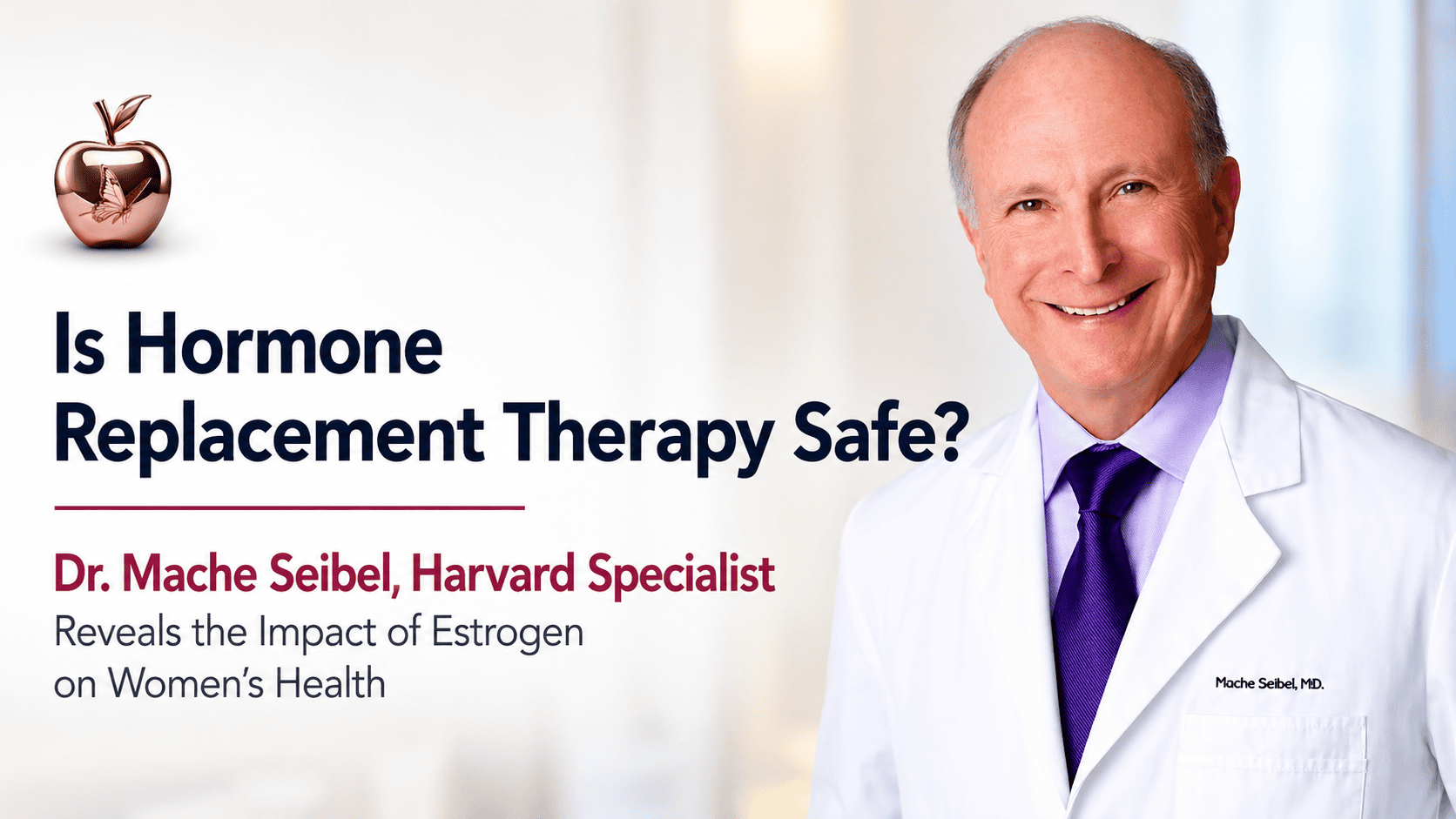
In this exclusive interview with Izadora Guimarães, Dr. Mache Seibel — a physician who served on the faculty of Harvard Medical School for nearly 20 years, author of over 18 books, international menopause expert, and founder of the digital magazine The Hot Years — sets the record straight on Hormone Replacement Therapy.
He reveals how a historical flaw in the 2002 study deprived millions of women of treatment, explains the scientific concept of the “Estrogen Window of Opportunity,” and presents modern solutions so that no woman has to suffer in silence.
From Fertility Medicine to Menopause Pioneering
Dr. Mache Seibel’s career in reproductive endocrinology began in the field of fertility. He was involved in some of the early in vitro fertilization (IVF) procedures in the United States — even helping gorillas at a zoo become pregnant.
However, a personal and medical turning point completely redirected his career path.
His wife carried a genetic risk for cancer and underwent surgery in her 40s to remove her ovaries and fallopian tubes, putting her into immediate surgical menopause. This occurred just six months after the release of the Women’s Health Initiative (WHI) study in 2002, which incorrectly linked estrogen use to an increased risk of breast cancer and heart disease.
Faced with widespread fear and doctors’ reluctance to treat his own wife, Dr. Mache Seibel dedicated himself to investigating the raw research data. After more than two years of detailed reanalysis and over two decades of ongoing research, the Harvard specialist proved what science now confirms: the study was flawed, and estrogen replacement is safe.
Menopause Is Not About Age: It Is a Biological Transition
One of the biggest mistakes in traditional medicine was linking menopause strictly to aging. Dr. Mache Seibel emphasizes that menopause does not define old age; rather, it is a hormonal transition, much like puberty.
While the average age of menopause is between 50 and 51, the specialist highlights crucial epidemiological data:
Approximately 10% of women enter menopause before age 45.
Approximately 1% of women enter menopause before age 40.
Perimenopause (the transition phase) begins 5 to 10 years before periods stop permanently.
This means hormonal fluctuations actively affect younger women in the prime of their professional lives, raising families, building businesses, and pursuing careers.
The Mistake of the 2002 WHI Study That Misled the World
Before 2002, estrogen was the most prescribed medication in the world. However, the Women’s Health Initiative study triggered a collapse in prescriptions by spreading fear of breast cancer.
Dr. Mache Seibel demonstrates exactly where the study’s methodology failed:
- Incompatible Study Design: The study was supposed to evaluate women aged 50 to 79. However, 75% of the women who received hormones were between 60 and 79 years old, while 75% of the placebo group (sugar pill) were between 50 and 59 years old.
- An Unfair Comparison: The study compared the health of older women taking hormones to the health of significantly younger women taking no hormones.
- The Real Data Revealed: When researchers finally matched women of the same age group (50 to 59), there was no increased risk of breast cancer.
- Cancer Protection: In women who took estrogen alone (women who had undergone a hysterectomy), the final data revealed 23% less breast cancer and lower rates of heart disease compared to the placebo group.
Science misstepped by releasing premature and distorted data, creating a myth that has lasted for over 20 years.
The "Estrogen Window" of Opportunity
Author of the bestsellers The Estrogen Window and The Estrogen Fix, Dr. Mache Seibel established the scientific concept of the “Estrogen Window” for safely initiating Hormone Replacement Therapy.
When to Start: The ideal time to begin estrogen replacement is within the first 10 years after menopause begins (typically between ages 50 and 59) or immediately following early menopause in younger women.
Cardiovascular Protection: Introducing estrogen early prevents plaque buildup in the arteries (atherosclerosis) and protects the cardiovascular system.
When to Stop: Dr. Mache clarifies that reaching a specific birthday (such as 60) does not require stopping hormone therapy if treatment was started within the proper window. With appropriate medical supervision, a woman can continue benefiting from hormonal protection.
Estrogen Treats the “SUM” (The Sum of You)
One of Dr. Mache Seibel’s most memorable points during the interview is the anatomical difference between treating the whole body versus isolated parts:
Estrogen receptors exist in virtually every cell of the human body: in the skin, eyes, brain, breasts, bones, bladder, and vagina.
When using systemic Hormone Replacement Therapy, a woman treats the SUM (S-U-M, the sum of her entire body). On the other hand, non-hormonal medications focused on a single symptom treat only SOME (S-O-M-E, just isolated parts).
“Noisy” vs. “Silent” Symptoms
Dr. Mache categorizes menopause symptoms into two fundamental groups:
- Noisy Symptoms
These are symptoms a woman notices immediately: hot flashes, night sweats, brain fog, mood shifts, insomnia, and urinary urgency.
- Silent Symptoms
These are invisible risks that progress silently until they cause severe complications:
Osteoporosis: Accelerated calcium loss in bones leads to decreased bone density. Dr. Mache Seibel points out a striking statistic: for a healthy 50-year-old woman, the risk of dying from complications of a broken hip is the same as her risk of dying from breast cancer.
Cardiovascular Disease: The narrowing and hardening of arteries occur silently and remain the leading cause of mortality in postmenopausal women.
Estrogen directly addresses silent symptoms, preserving bone mass and vascular elasticity.
Modern Non-Hormonal Options: The Brain's Thermostat
For women with strict medical contraindications (such as a history of severe blood clots, liver dysfunction, or certain types of cancer), science has developed highly effective non-hormonal alternatives.
Dr. Mache Seibel explains that the brain has an internal “thermostat” located in the hypothalamus. As estrogen levels drop during menopause, this thermostat misfires, triggering intense heat surges.
Modern non-hormonal medications, such as Elinzanetant, act directly on brain neuroreceptors to reset temperature regulation and improve sleep quality without using hormones.
Menopause in the Workplace: A Billion-Dollar Issue
In his book Working Through Menopause: The Impact on Women, Business, and the Bottom Line, Dr. Mache Seibel expands the discussion into the corporate and economic sectors:
25% of the global workforce is composed of women going through perimenopause or menopause.
1 in 10 women leaves the workforce entirely due to the severity of menopause symptoms.
25% of women pass up promotions or leadership roles because they feel brain fog, fatigue, and hot flashes compromise their executive performance.
In the United States alone, untreated hot flashes cost businesses an estimated $16 billion in lost productivity, absenteeism, and extra medical visits.
He advocates for workplace support policies — such as temperature control, quiet rest areas, flexible scheduling, and access to sanitary products — ensuring experienced women can thrive at the peak of their careers.
Practical Guide: What to Ask Your Doctor
To ensure a productive and safe medical consultation, Dr. Mache Seibel advises women to go prepared:
- Bring Someone With You: Have a trusted person accompany you to help record instructions and details.
- Write Down Your Questions in Advance: Anxiety can make you forget important questions during the visit.
- Take Notes: Keep a clear written record of the recommended guidance.
- Ask Specific Questions:
When is the ideal time for me to start?
What are my exact hormonal and non-hormonal options?
What side effects should I expect initially?
What specific health risks is this treatment aiming to protect me against?
Menopause Is Not a Disease: Do Not Suffer in Silence
Dr. Mache Seibel concludes the interview with a clear message of hope and empowerment: menopause is a natural biological process, but suffering from debilitating symptoms is neither natural nor necessary.
With modern therapeutic options, established safety profiles, and accurate information, every woman has the right to navigate maturity with health, vitality, and full performance.
Watch the Full Interview
Watch the full interview with Dr. Mache Seibel on Izadora Guimarães’ YouTube channel and share this content with other women who need access to quality scientific information.
WATCH THE FULL EPISODE ON YOUTUBE
Menopause: Pleased To Meet You is part of the Multiverse of Women 40+, bringing together conversations about health, menopause, longevity, behavior, culture, lifestyle and the many dimensions of life after 40.
More Play & Less Pause!
Latest News

- 13 de October de 2026
- 15 de September de 2026
- 9 de September de 2026

- 24 de August de 2026