Date time post
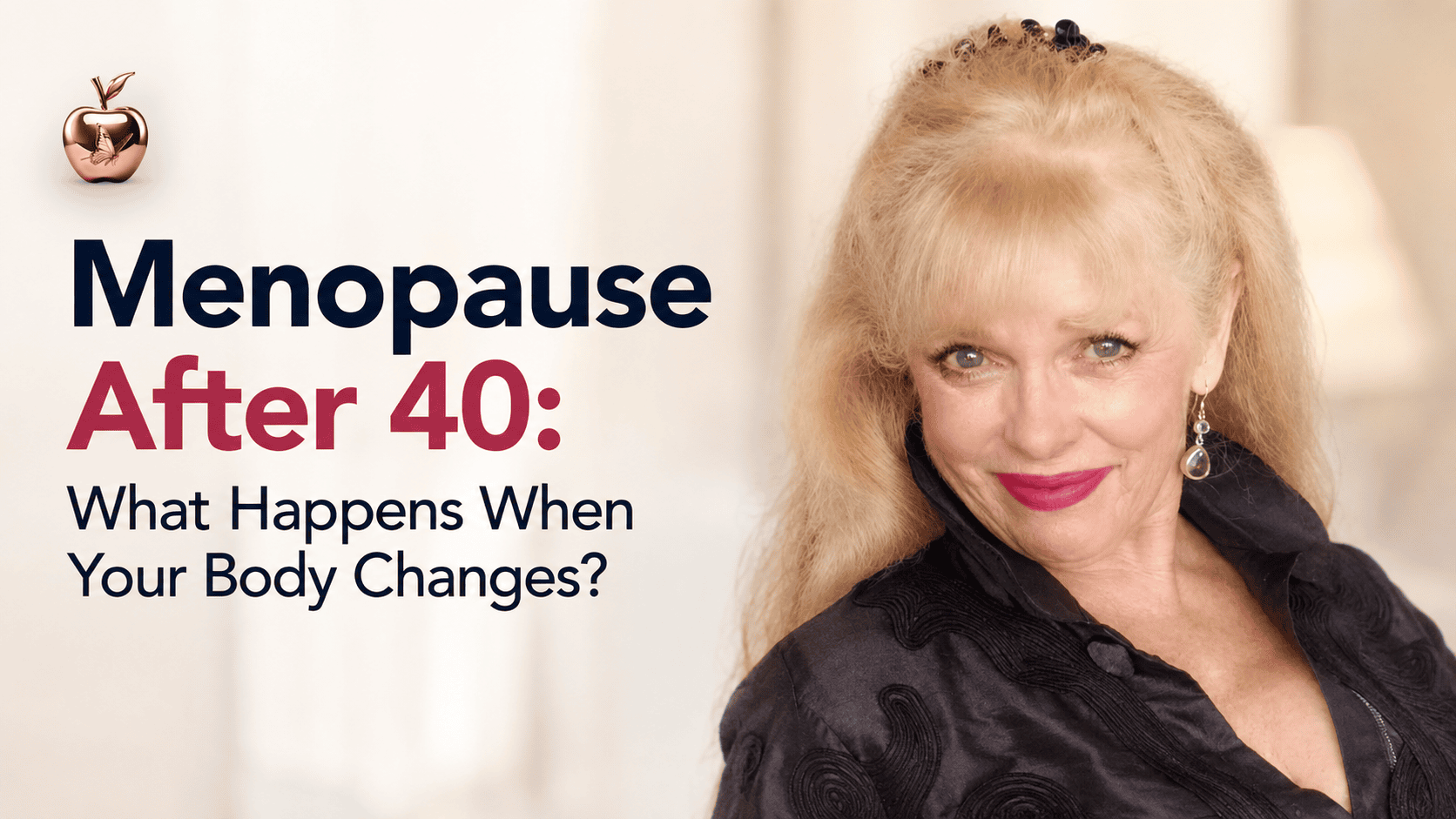
Menopause After 40: What Happens When Your Body Changes?
What happens when your body starts changing and you don’t immediately understand why?
For Susan Sheehan, the answer began with a question.
An Australian speaker and health educator, Susan had spent much of her life being physically active, learning about the brain and helping other people understand how to improve their lives. Then, in her 40s, she entered perimenopause and suddenly found herself asking a different kind of question: What is happening to me?
In this international conversation with Izadora Guimarães, Susan talks about menopause after 40, changing body composition, exercise, nutrition, HRT, health information and the process of getting to know the woman she was becoming.
Curiosity became Susan’s strategy for life
Susan’s relationship with curiosity began long before menopause.
She describes how her experiences as a young mother shaped her career. After facing serious health challenges within her family, she learned early that asking questions could open doors to answers.
That curiosity eventually led her into brain training, writing and speaking.
Susan says she has written books about brain training and speaks publicly about helping people understand how to use information in practical ways. She is careful to distinguish this work from being a neuroscientist. Her role, as she describes it, is about helping people understand and apply what they learn.
That same instinct would later become important when she entered perimenopause.
Susan’s experience of perimenopause began in her 40s
Susan describes herself as extremely active when she was younger.
Her background includes competitive aerobics at a national level in New Zealand, skipping, skating and earning a black belt in Taekwondo. Later, when Zumba arrived in Australia, she became an instructor.
Movement was already part of her identity.
So when she began experiencing hot flashes, emotional changes and a general feeling that something was wrong in her 40s, the experience surprised her.
She had expected menopause to happen later.
Instead, she found herself asking the same question she had learned to ask throughout her life:
How can I feel better?
Her answer was to start looking for information.
Menopause can also change the way you see yourself
One of the most revealing parts of Susan’s story is not simply the physical changes she experienced, but what those changes meant for her identity.
She talks about changes in her breasts, body shape and body composition as she moved through midlife.
At one point, she tells the story of appearing at a business event with a banner showing an older image of herself. A man in the audience asked whether she had undergone breast surgery because her body looked different from the photograph.
Susan says she was horrified.
Looking back, however, she recognizes that she was also dealing with something deeper: a new physical identity.
Her body had changed.
And she had to change the way she saw herself.
You don’t go back. You become someone new.
This becomes one of the central ideas of the conversation.
Susan does not describe menopause as a process of returning to the woman she was before.
Instead, she talks about learning to know the “new you.”
That shift can be uncomfortable.
Symptoms may affect confidence. Clothes may fit differently. Activities that once felt effortless may become harder. The body can begin to feel unfamiliar.
For Susan, acceptance became part of the process.
That does not mean giving up on strength, health or vitality. Quite the opposite.
She describes herself as being in her 60s, fit, strong and healthy, and talks about maintaining an active lifestyle.
Her message is that adaptation is part of aging.
Building a maintenance plan after 50
Susan uses an interesting metaphor for health after 50: maintaining the body is a little like maintaining a car.
You don’t wait until something breaks completely before paying attention to it.
Instead, you maintain it.
For Susan, that means continuing to pay attention to exercise, nutrition and the needs of the body rather than taking a long break from healthy habits and expecting everything to remain unchanged.
She talks about maintaining strength and staying active, while also acknowledging that the body changes over time.
The goal is not to freeze yourself at 30.
It is to keep taking care of the body you have now.
HRT: one woman’s decision is not every woman’s decision
HRT is one of the most important subjects in the conversation.
Susan says she did not use HRT and instead chose to focus on lifestyle, nutrition and supplements.
However, she is very clear that she is not against HRT.
She knows women who have used it and says some have experienced significant benefits.
Her central message is about informed choice.
Women should learn about HRT, understand the information available and make decisions based on their own circumstances rather than simply doing what a friend, neighbor or someone online recommends.
That distinction is crucial.
Susan’s experience with HRT is her own experience. It should not be interpreted as a universal recommendation for or against hormone therapy.
Ask where the information came from
Perhaps the strongest message in this conversation is surprisingly simple:
Ask questions.
Susan encourages women to ask where health information comes from before accepting it as fact.
That becomes particularly important in an era when menopause advice is everywhere.
A friend may have had one experience.
Someone on social media may have had another.
A relative may swear that a particular treatment worked for her.
But an individual experience is not automatically evidence that the same approach will work for someone else.
Susan’s philosophy is to stay curious and find reliable information before making decisions.
Your body is not your friend’s body
Susan repeatedly emphasizes individual differences.
When discussing HRT and other menopause decisions, she says women need to understand their own values, circumstances and comfort levels.
That principle extends beyond hormones.
Exercise, nutrition, sleep, medication and lifestyle all involve decisions that may need to be personalized.
The fact that something worked for another woman does not automatically make it the right choice for you.
Curiosity creates space for a better question:
What do I need?
Food can be healthy and enjoyable
The conversation takes a lighter turn when Susan and Izadora discuss food.
Susan describes growing up with healthy eating as part of everyday life. She remembers her children sometimes being fascinated by friends’ houses where they could have white bread, processed peanut butter and Coca-Cola.
At home, things were different.
Whole foods and healthier choices were part of the family’s lifestyle.
But Susan is not advocating a joyless relationship with food.
She makes room for pleasure too.
Ice cream.
Chocolate.
A movie.
The occasional indulgence.
The message is balance.
Healthy food does not have to feel like punishment. It can be delicious, enjoyable and part of a lifestyle that feels good.
Menopause education in Australia
Susan’s personal journey eventually became a professional mission.
When she first began researching menopause, she says the subject was not being discussed nearly as openly in social media or television.
She spent years researching, talking to different organizations and visiting health clubs and health clinics to understand what was available to women aged 40 and over.
Eventually, she created a menopause support program.
She says it grew to around 5,000 women online.
That evolution is important because Susan’s work did not begin with a business strategy.
It began with a personal question:
If I am experiencing this, what are other women experiencing?
Sleep, exercise and the everyday basics still matter
As the conversation moves toward practical lifestyle choices, Susan emphasizes some of the fundamentals.
She talks about focusing on sleep, eating well, listening to the body and strengthening muscles.
She encourages women to find ways to incorporate strength into everyday life, whether through exercises such as squats and push-ups or simply choosing the stairs.
Her broader message is not about creating an impossible routine.
It is about removing the mental obstacle that says:
“I don’t like doing this.”
Sometimes, she argues, you have to do the thing anyway.
The importance of talking about menopause
Susan and Izadora share a strong belief that women need to talk more openly about menopause.
Not gossip.
Not fear.
Not endless conversations based on unverified claims.
Real conversations.
Questions asked in the right places.
Information sought from the right people.
Susan warns against getting trapped in groups where conversations become dominated by negativity, hatred or fear.
The emotional environment around health information matters too.
A conversation that leaves someone feeling frightened and overwhelmed may not help her make better decisions.
Perimenopause can feel like a wave
Toward the end of the interview, Susan describes perimenopause as a wave.
One day, something may seem to work.
The next day, the body may respond differently.
There can be neurological, biological and physiological changes happening at the same time.
That uncertainty can be frustrating.
But Susan’s response is not to give up.
It is to remain curious.
Try.
Observe.
Learn.
Adapt.
Then try again.
Becoming the woman you are now
The final message of Susan’s story is ultimately bigger than menopause.
She encourages women to open their minds, listen, learn to let go of what no longer works and move toward the person they are becoming.
Information creates awareness.
But action is what turns information into change.
That is the thread connecting Susan’s story from beginning to end.
She learned to ask questions when her family needed answers.
She used curiosity to build her career.
She used it again when she entered perimenopause.
And she continues to encourage other women to do the same.
Menopause after 40 does not have to mean losing the person you were.
It can mean learning how to understand the person you are becoming.
Watch the Full Interview
Watch Izadora Guimarães in conversation with Susan Sheehan.
WATCH THE FULL EPISODE ON YOUTUBE
Menopause: Pleased To Meet You is part of the Multiverse of Women 40+, bringing together conversations about health, menopause, longevity, behavior, culture, lifestyle and the many dimensions of life after 40.
More Play & Less Pause!
Latest News

- 13 de October de 2026
- 15 de September de 2026
- 9 de September de 2026

- 1 de September de 2026