Date time post
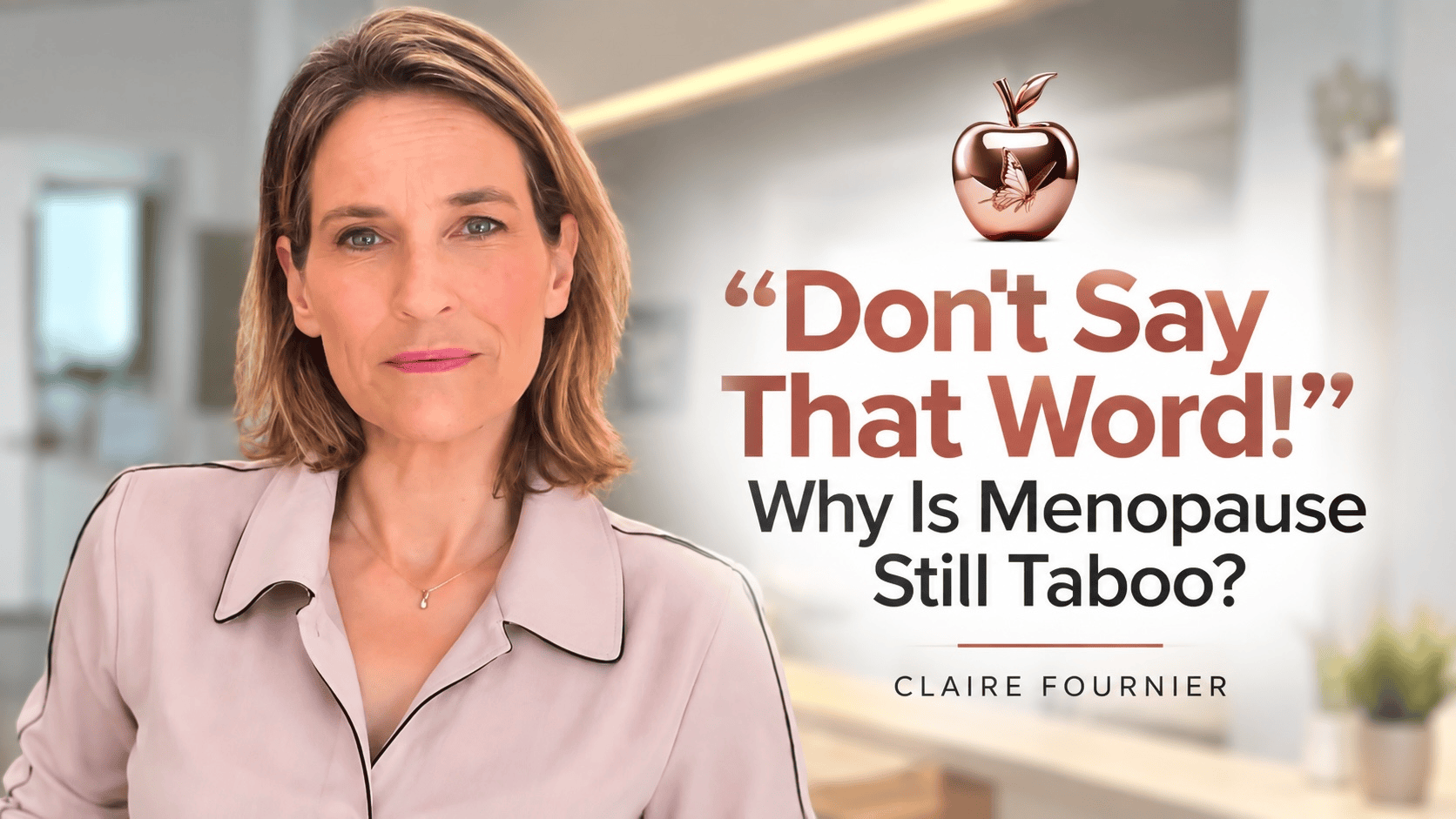
Why Is Menopause Still Taboo in France? Claire Fournier on Age, Beauty and Silence
There is a particular contradiction surrounding women and aging that is difficult to ignore. At 50, women can be described as powerful, beautiful, successful and accomplished. They can be encouraged to celebrate their confidence and experience. Yet there remains one word that many people still seem uncomfortable saying out loud: menopause.
For French journalist and television presenter Claire Fournier, that contradiction became personal when she was 47. She had been feeling unusually tired and somewhat depressed, while her periods had begun behaving differently. When she went to her gynecologist, the explanation was surprisingly simple: perimenopause.
The diagnosis itself was not necessarily the most shocking part. What stayed with Claire was the realization that she had almost no framework for understanding what was happening to her. She had imagined menopause as something that happened much later in life, perhaps in a woman’s sixties. Instead, at 47, she was suddenly being told that she was already in the transition.
That moment eventually led her to research the subject as a journalist and, in 2023, create Chaud Dedans, a podcast dedicated to women experiencing perimenopause and menopause. But Claire’s story is about much more than creating a successful podcast. It raises a larger question about why so many women reach this stage of life without having the information, language or cultural references they need to understand it.
Claire Fournier’s Perimenopause Began With a Question: Why Didn’t Anyone Tell Me?
Claire describes herself as having been profoundly uninformed about perimenopause when she first heard the word at 47. Her reaction was not unusual in the conversation: surprise, disbelief and the feeling that this was information she should have encountered much earlier.
Part of that reaction came from the way she saw herself. Claire had had her daughter at 41, relatively late in life, and still thought of herself as a young mother. Menopause felt distant, almost belonging to another generation. The idea that she could already be experiencing the transition challenged the mental timeline she had built around aging.
But once the initial shock passed, the journalist in her took over.
Why had her gynecologist never discussed perimenopause with her before that consultation? Why had her mother never explained it? Why had her friends not talked about it? And why had the media, despite its enormous influence over how women understand their bodies and lives, not prepared her for something that could become such a significant part of adulthood?
Instead of treating those questions as merely personal, Claire began researching them. The more information she gathered, the more she felt that it needed to reach other women. Her own lack of preparation became the starting point for a much larger conversation.
That is how Chaud Dedans emerged.
From a Personal Discovery to Chaud Dedans
The name of Claire’s podcast captures something important about the tone she wanted to bring to the subject. In French, Chaud Dedans can refer to being “hot inside,” making an obvious connection to hot flashes, but Claire also deliberately chose the expression because of its sensual undertone. A changing body does not automatically mean the disappearance of sexuality, attraction or desire.
That double meaning allowed the podcast to approach menopause without reducing women to symptoms. It also created curiosity. What exactly was this podcast going to talk about? Menopause, sexuality, aging, relationships? The answer, in many ways, was all of it.
Claire was also interested in the format itself. Her background in television and news journalism had trained her to work with short formats, where interviews are compressed into tightly edited pieces. The podcast offered something different: time. She could sit with a guest for half an hour and allow a conversation to unfold rather than reducing every answer to a few seconds of television.
The choice of subject and format came together when she approached Binge Audio, a French podcast platform known for feminist programming. Claire noticed that many of the existing shows were aimed primarily at younger women in their twenties and thirties. There was much less content specifically addressing women 45 and over.
The gap was obvious to her. If women were already reaching midlife without enough information about their bodies, there was room for a medium that could give them time, context and conversation.
The response confirmed what she suspected. Women began listening, and Claire was increasingly invited to discuss menopause on other media platforms. Yet visibility did not mean that the taboo had disappeared.
In fact, one of the most revealing parts of her experience came from what happened after she became more public about the subject.
You Can Be Powerful at 50, But Don’t Say the Word Menopause
Claire was told that talking publicly about menopause could be a professional mistake. Because she worked in television and was perceived as looking younger than her age, some people questioned why she would associate herself so openly with menopause.
The underlying message was difficult to miss: being 50 was acceptable as long as it did not look too much like being 50.
Claire pushed back against that idea. Why should “you don’t look your age” automatically be considered a compliment? Why should looking one’s age be something a woman needs to avoid?
Her answer is connected to a much broader cultural pressure. Women are frequently encouraged to appear younger, and aging can be treated almost as a problem to be managed rather than a natural part of life. Claire argues that this pressure makes it harder for women to embrace their age openly.
Menopause becomes caught inside that contradiction. A woman can be celebrated for reaching 50 with confidence, experience and professional success, but the word itself can still carry an uncomfortable association with being old.
As Claire puts it, women are told that at 50 they are powerful, beautiful and successful, but they should not pronounce the word “menopause.”
That is why the stigma surrounding menopause cannot be separated entirely from the stigma surrounding female aging.
If aging is something women are expected to conceal, then menopause becomes one of the most visible reminders of it. And that can affect not only how women see themselves, but also how comfortable they feel allowing other people to see them.
The Missing Role Models of Menopause
Claire sees the absence of visible role models as another reason the conversation remains difficult, particularly in France.
She points to women such as Naomi Watts and Oprah Winfrey as examples of internationally known women who have spoken publicly about menopause. In France, however, she says she encountered greater reluctance among actresses and other public figures.
When she began looking for well-known women to invite onto her podcast, some praised the project and told her how important the work was. But when it came to discussing their own menopause publicly, the response was often a polite refusal. Some suggested another woman who might be willing to participate instead.
For Claire, this reveals something deeper than a shortage of podcast guests. It demonstrates how strongly menopause can still be associated with the loss of youth and attractiveness.
She imagines something that may sound simple but would represent a significant cultural shift: a film in which a menopausal woman is the protagonist, falls in love, experiences desire, makes unexpected choices and does “wild things.” Not a character whose menopause is the entire plot, but a woman whose life continues to be expansive precisely because menopause has not made her less of a protagonist.
The distinction matters.
Representation is not only about seeing women who are older. It is about seeing women who are still fully alive within the cultural imagination: desirable, complicated, funny, ambitious, sexual, adventurous and capable of beginning new chapters.
Claire’s own mother represents an older generation for whom menopause was expected to remain private. Born in 1946, her mother’s reaction to the public discussion is essentially: why does everybody need to know about something so intimate?
That perspective helps explain why cultural change can be slow. Silence is not always imposed from outside. Sometimes it is inherited as a form of privacy, respectability or protection.
Breaking that silence does not necessarily mean forcing every woman to speak publicly about her body. It means creating a culture in which speaking about menopause is an available choice rather than something women feel compelled to avoid.
The Silence Doesn’t Stop at Home
The taboo also follows women into their relationships.
Claire describes conversations with women who worry that if they tell their partner they are going through menopause, the partner may begin to see them differently. Behind that fear is another uncomfortable association: if the woman is getting older, perhaps the man must be getting older too.
In Claire’s account of French society, some men therefore avoid the subject because menopause becomes an unwanted reminder of aging itself. She also says that, based on testimonies she has encountered, only around one in four French women openly discusses menopause within her marriage or partnership. That figure is presented in the interview as part of Claire’s experience and reporting, rather than independently established here.
The larger point does not depend entirely on the number.
A woman may be experiencing changes in sleep, mood, temperature regulation, sexuality or other aspects of her life while simultaneously feeling that she should not talk about them with the person closest to her. When that happens, menopause becomes an individual burden rather than a shared life transition.
And the same pattern appears in another major part of adult life: work.
What Happens When Menopause Enters the Workplace?
Claire has begun conducting workshops for French companies that want to address menopause among their employees. She is careful to point out that such initiatives are still relatively uncommon, but she has noticed how powerful the opportunity to talk can be when it is deliberately created.
Women who attend her workshops often express relief at being able to discuss menopause with colleagues. The subject may never have emerged naturally around the coffee machine, even when several women are experiencing similar things.
The workshop therefore does more than provide information. It creates permission.
Claire discusses taboo, medical treatment and stereotypes, but she has also observed something revealing about the physical composition of the room. When the group consists only of women, participants tend to speak openly and exchange experiences. When a man or a senior manager is present, the questions can disappear.
The women do not necessarily have fewer questions. They become less willing to ask them.
Claire interprets this as fear of stigma in the workplace. Employees may worry about being judged, treated differently or perceived through the lens of menopause rather than through their professional abilities. As a result, she increasingly prefers smaller groups without managers or men when organizing these conversations.
That observation points to an important distinction in workplace conversations about menopause. It is not enough for an organization to say that menopause is a topic people are allowed to discuss. People also need to feel that speaking will not carry a professional cost.
HRT in France: Fear, Caution and the Legacy of WHI
Healthcare is another area where Claire sees a significant gap between the need for information and women’s experience of getting it.
During the interview, she describes HRT use in France as relatively uncommon and refers to a figure of 6% of women over 45 using HRT. She also discusses the continuing influence of the 2001 Women’s Health Initiative study, saying that prescriptions declined sharply afterward and that many doctors became more cautious because of concerns about potential risks and side effects. These figures and interpretations are Claire’s account in the interview and are not independently fact-checked in this article.
Her own experience illustrates another part of the issue: access is not simply a question of whether a treatment exists. A woman also needs to find a healthcare professional who is comfortable discussing it and who can evaluate her individual circumstances.
Claire says her own gynecologist was willing to prescribe HRT and describes options such as gel or patches. She also notes that, in France, once prescribed, HRT is covered at no cost according to her account. Again, these are details discussed by Claire in the interview rather than a comprehensive description of current French prescribing or reimbursement policy.
Perhaps more important than any individual treatment choice is the uncertainty Claire describes around the subject.
She says doctors she interviewed told her menopause and perimenopause received very limited attention during their medical training. She connects that lack of preparation with the difficulty women can encounter when looking for someone who understands what they are experiencing.
This brings the conversation back to the question that started her own journey: information.
Women’s Health Still Has Questions Waiting to Be Answered
Claire does not present herself as a medical expert, and she deliberately stops short of offering medical explanations. Her role in the conversation is that of a journalist who has spent years asking questions, interviewing specialists and observing where the gaps remain.
One of those gaps, she argues, is research.
She recalls conversations with scientists including Lisa Mosconi and raises questions about the relationship between hormonal changes, HRT and brain health. Claire’s point is not that a particular treatment has already been proven to prevent Alzheimer’s disease. Rather, she is highlighting the questions she believes deserve serious investigation and the frustration she hears around the limited research available to answer them.
The conversation also expands the meaning of menopause beyond hot flashes and brain fog. Claire points toward broader health questions involving areas such as cardiovascular health and osteoporosis, arguing that women’s health deserves greater attention during this stage of life.
That perspective is central to why her work extends beyond symptom lists.
Menopause is not only a collection of physical sensations that need to be endured. It is a period in which women may be asking questions about their bodies, relationships, careers, sexuality, identity and future at the same time.
And those questions cannot all be answered in a doctor’s appointment.
The Transition Is Difficult. You Still Don’t Have to Go Through It Alone.
By the end of the conversation, Claire’s advice is remarkably simple: look for information, talk to other women, exchange experiences and ask for help.
She is now several dozen episodes into Chaud Dedans, yet she openly acknowledges that she still has unanswered questions. That admission is important because it moves the conversation away from the idea that there is one perfect menopause guidebook, one universal experience or one person who has figured everything out.
There is still uncertainty. There are still individual differences. There are still questions medicine and society need to answer.
But uncertainty does not have to mean isolation.
Claire also emphasizes the importance of finding a healthcare professional who listens. In France, she describes the shortage of gynecologists as particularly difficult for women living outside major cities. For someone already struggling to understand what is happening to her body, having to navigate limited access to appropriate care can add another layer of frustration.
Her own experience also reinforces another point: perimenopause is not an event that suddenly arrives on a woman’s 50th birthday. For Claire, it became noticeable at 47. The transition can begin earlier, and recognizing that possibility can change how a woman interprets symptoms that might otherwise be dismissed as stress, exhaustion or simply “getting older.”
The most hopeful part of Claire’s message is not that the transition is easy. She describes it as difficult and turbulent. What she offers instead is the possibility that it is a transition, not a permanent definition of who a woman is.
The woman who once wondered why nobody had told her about perimenopause has spent the years since then making sure other women have somewhere to look for answers.
And perhaps that is the larger lesson of Chaud Dedans: sometimes breaking a taboo begins with something very ordinary. Someone finally says the word.
Menopause.
Not as an insult. Not as a euphemism for becoming old. Not as something that must be hidden to remain beautiful, desirable or professionally relevant.
Just as part of women’s lives.
And once the word can be spoken, the conversation can finally begin.
Watch the Full Interview
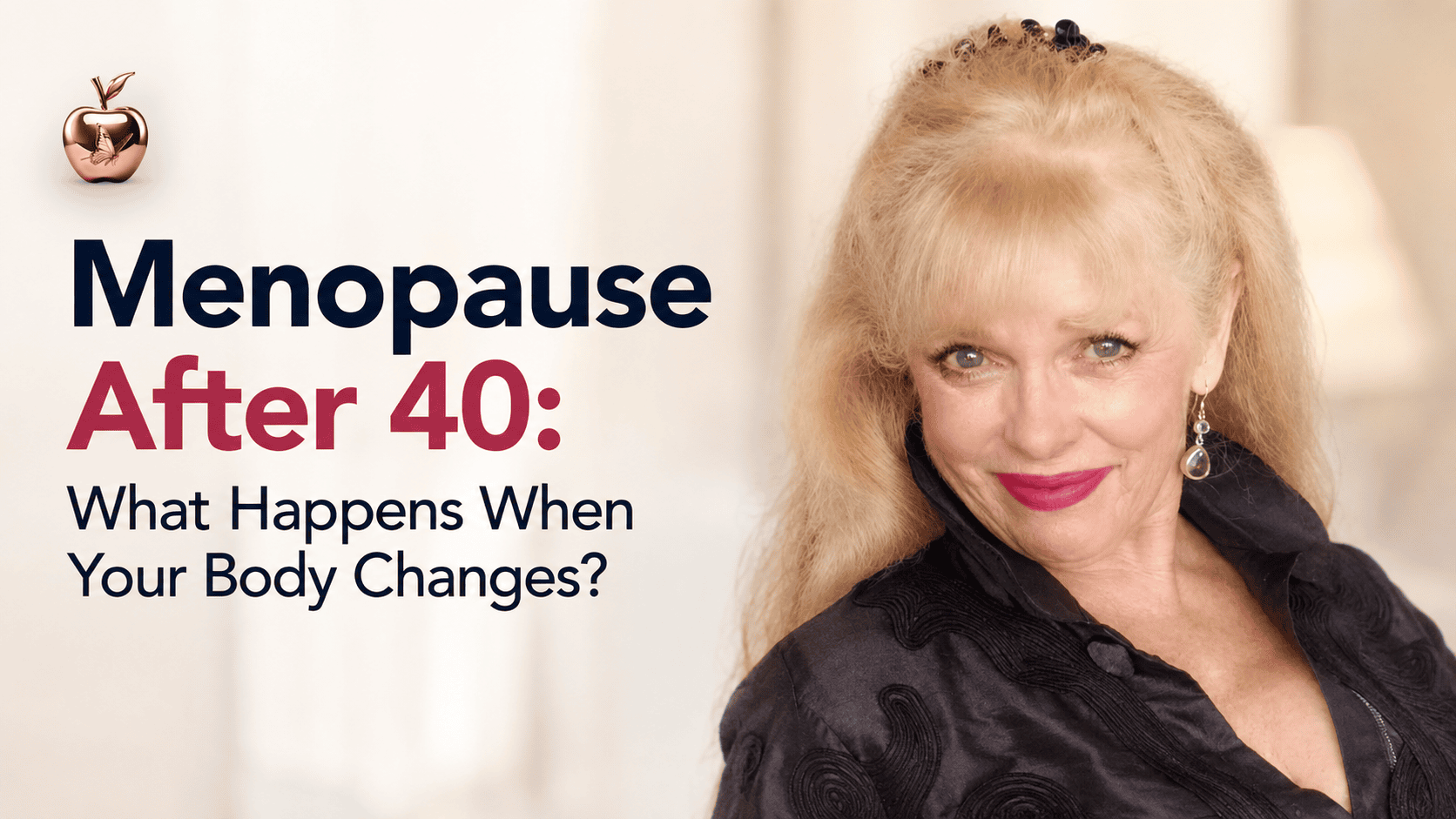
In this episode of Menopause: Pleased to Meet You, Izadora Guimarães speaks with French journalist and Chaud Dedans creator Claire Fournier about menopause in France, the stigma surrounding aging, the absence of role models, menopause in relationships and the workplace, HRT, medical education and the importance of finding information and support.
WATCH THE FULL EPISODE ON YOUTUBE
Menopause: Pleased To Meet You is part of the Multiverse of Women 40+, bringing together conversations about health, menopause, longevity, behavior, culture, lifestyle and the many dimensions of life after 40.
More Play & Less Pause!
Latest News
- 13 de October de 2026
- 15 de September de 2026

- 1 de September de 2026
- 24 de August de 2026